
Predictive Thermal Management Using Edge AI on BeagleBone for Embedded Linux Systems
Anup Halarnkar
2/21/20263 मिनट पढ़ें
Introduction
Edge AI systems deployed in industrial automation, agricultural monitoring, medical kiosks and environmental sensing platforms are increasingly relying on compact embedded computing devices for real-time inference and decision-making.
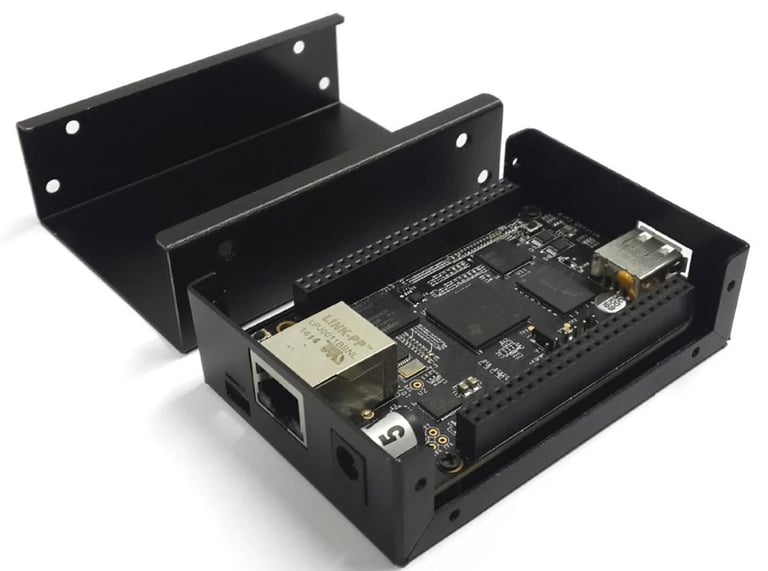
Platforms such as the BeagleBone, when running Embedded Linux, enable localized data processing without dependency on cloud infrastructure. However, these deployments often operate in thermally constrained environments such as sealed control cabinets, remote field enclosures or passive cooling systems.
Sustained computational workloads such as machine learning inference, sensor fusion or signal processing can gradually lead to heat accumulation within these enclosures, resulting in performance degradation, system throttling or unexpected shutdowns.
BeagleBone as an Edge AI Deployment Platform
BeagleBone platforms provide a versatile ARM-based computing environment capable of running Embedded Linux distributions optimized for sensor interfacing and on-device inference.
Using standard Linux telemetry interfaces, the system can continuously monitor:
CPU utilization
Processor temperature
Ambient enclosure temperature
Humidity levels
ML inference workload intensity
This multi-sensor data can be captured via Industrial I/O (IIO) subsystems and logged over time for predictive analysis.
Sensor Inputs for Thermal Prediction
Thermal build-up within embedded enclosures is influenced by multiple interacting factors including:
Computational load trends
Environmental temperature
Airflow conditions
Humidity variations
Duty cycle of ML inference workloads
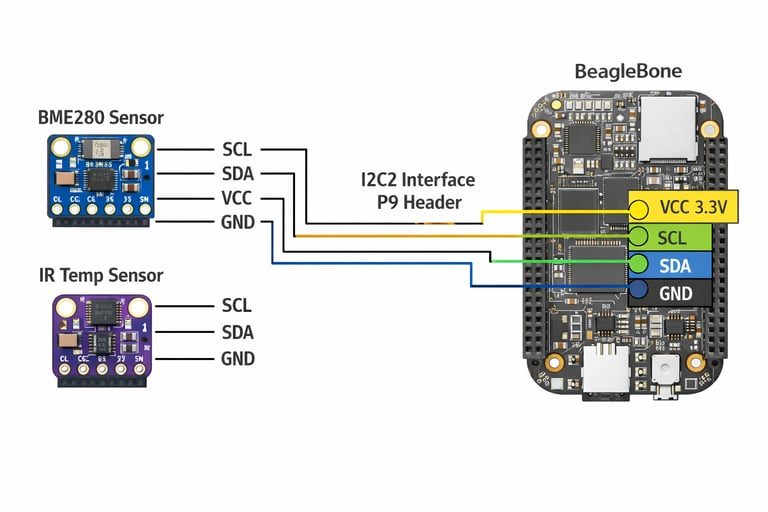
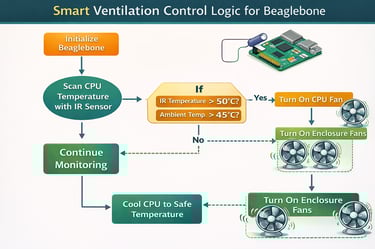
By combining processor telemetry with environmental sensor inputs, the system can construct a time-series dataset representing the operational state of the device over extended periods. Some example sensors like BME280 from Bosch for monitoring of Ambient Temperature, Ambient Pressure and Humidity while another IR sensor for specific on board temperature sensing as shown in below block diagram.
Model Training Approach
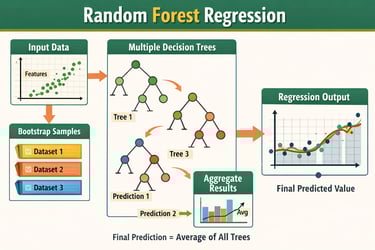
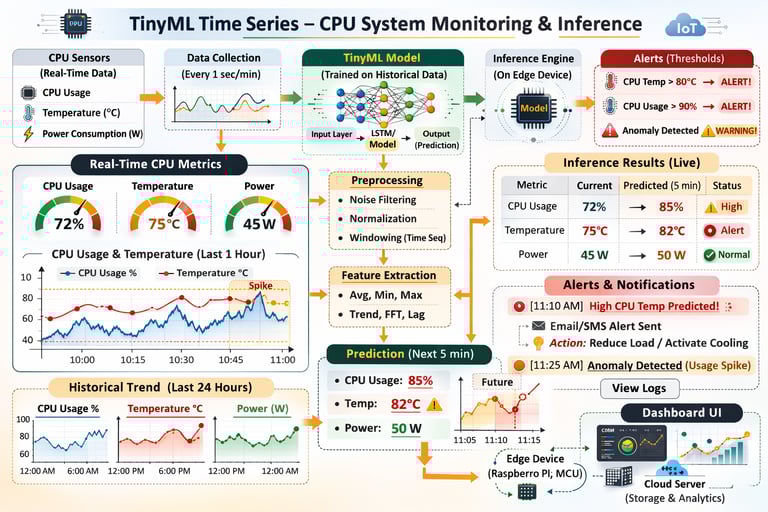
Using historical telemetry data collected during device operation, a lightweight regression-based machine learning model can be trained to predict the likelihood of thermal overload within a defined future time window.
Suitable approaches include:
Random Forest Regression
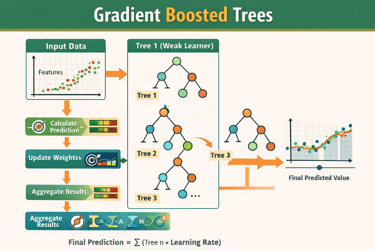
Gradient Boosted Trees
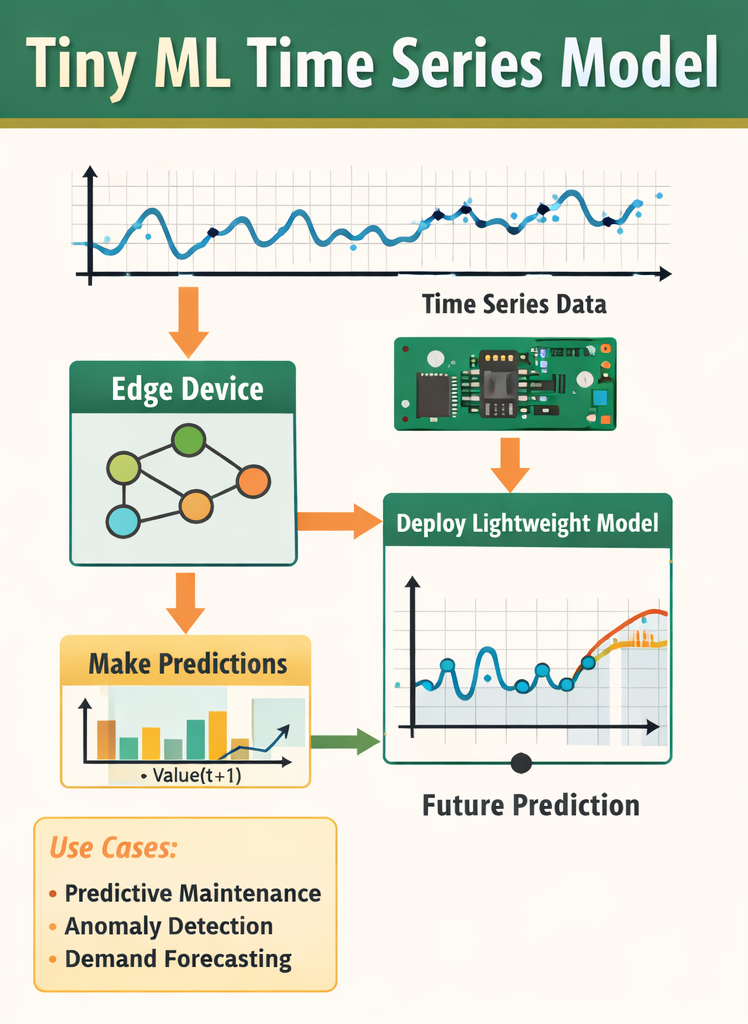
TinyML Time-Series Models
The trained model estimates:
Thermal overload risk within the next 5–10 minutes allowing proactive mitigation strategies to be triggered before temperature thresholds are reached.
Deployment on Embedded Linux
Once trained, the predictive model can be deployed directly on the BeagleBone platform using lightweight inference engines such as TensorFlow Lite or ONNX Runtime.
TensorFlow Lite latest version may be incompatible with Beaglebone as the Arm-v7 is old and support for dependecies (especially for python libraries) is not easily available. However, using a C++ based model may be much easier than python ecosystem but comes with a steeper learning curve. We will share more details in upcoming blogs about the challenges faced by us.
Next, Real-time telemetry streams are fed into the model at defined intervals, enabling continuous estimation of future thermal risk. The Visual UI may be possible via HDMI on external Monitors using GTK applications or on Browsers via Python Flask, React, etc.
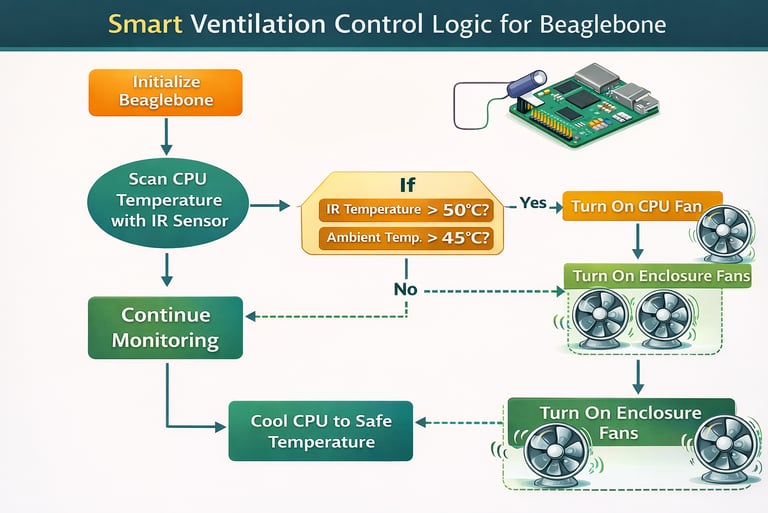
Use Case: Predictive Ventilation Control Logic
Based on predicted thermal trends, the system can intelligently:
Activate ventilation mechanisms
Reduce inference duty cycles
Pause non-critical workloads
Alert system operators
This ensures cooling actions are taken only when future thermal stress is likely, improving energy efficiency and reducing unnecessary fan operation.
Cross-Industry Use Cases
Predictive thermal management is applicable across:
Industrial control panels
Smart irrigation gateways
Remote medical monitoring units
Environmental sensing stations
Telecom edge compute nodes
By maintaining optimal thermal conditions, such systems can operate reliably in challenging deployment environments.
Energy Efficiency and Reliability Benefits
Proactive cooling strategies reduce:
Energy consumption
Component wear
System downtime
Maintenance overhead
while extending operational lifespan of embedded AI platforms deployed in field conditions.
Conclusion
Edge AI systems operating in real-world environments must account not only for computational performance but also for thermal stability. By leveraging onboard telemetry and predictive machine learning models, embedded platforms such as BeagleBone can proactively manage ventilation systems and maintain reliable performance under dynamic workloads.
Predictive thermal management represents a critical step toward resilient, energy-efficient Edge AI deployments across industrial and socially impactful domains.
संपर्क
सहयोग या पूछताछ के लिए संपर्क करें
ईमेल
enquiry@thrusteducon.com
© 2025. All rights reserved.